Institute: National Institute of Geophysics and Volcanology (Italian: Istituto Nazionale di Geofisica e Vulcanologia, INGV)
Title: Researcher
Country/Region: Italy
Period: 2026/10/31 - 2027/1/28
Theme: Quantifying Fault Loading Around Mount Fuji Using GNSS Strain-Rate Inversion
Host: Yosuke AOKI
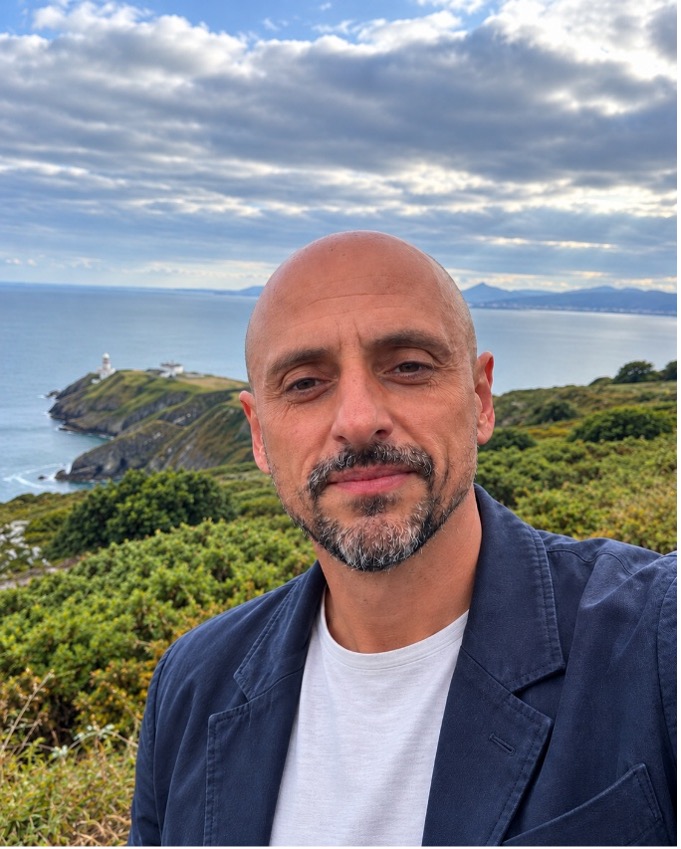
Introduction: I am a researcher at the Istituto Nazionale di Geofisica e Vulcanologia (INGV), Italy, with over two decades of experience in earthquake geodesy, active tectonics, and crustal deformation. My research focuses on understanding the processes governing the seismic cycle by integrating GNSS, InSAR, and seismological observations with elastic dislocation modeling and geodetic inversion techniques.
Throughout my career, I have investigated major earthquakes in Italy, including the 1908 Messina, 1976 Friuli, 2009 L'Aquila, 2012 Emilia, and 2016–2017 Central Italy seismic sequences. My work has also extended to significant events worldwide, such as the 2011 Tohoku-Oki (Japan), 2015 Lefkada (Greece), 2020 Elazığ (Türkiye), 2020 Samos (Greece), 2023 Türkiye earthquake doublet, 2023 Morocco, 2024 Wushi (China), and 2024 Hualien (Taiwan) earthquakes. These investigations have contributed to characterizing coseismic slip distributions, postseismic deformation, and stress transfer across diverse tectonic settings.
One of my significant research contributions has been the identification and modeling of aseismic transient deformation associated with the 2010–2014 Pollino seismic swarm in Southern Italy. By combining GNSS and InSAR time-series observations, this study revealed slow-slip events occurring alongside seismic activity, providing some of the first documented evidence of this phenomenon in Italy. These findings offered valuable insights into the interactions between seismic and aseismic fault slip and their implications for earthquake generation processes.
More recently, my research has focused on interseismic deformation and fault loading, particularly along the Southern Alps and Northern Apennines, two major seismogenic regions of northern Italy. Using long-term GNSS observations and elastic dislocation modeling, I have investigated crustal strain accumulation, fault slip rates, interseismic coupling, and seismic moment accumulation, contributing to a better understanding of active fault systems and their implications for seismic hazard assessment.
During my stay at the Earthquake Research Institute (ERI), University of Tokyo, I will collaborate with Dr. Yosuke AOKI on the project "Quantifying Fault Loading Around Mount Fuji Using GNSS Strain-Rate Inversion". Building on my previous research, this project aims to investigate the spatial distribution of crustal strain and fault loading around Mount Fuji by integrating high-resolution GNSS observations, interplate coupling models, and strain-rate inversion techniques.
Fiscal Year: 2026