

第1056回地震研究所談話会開催のお知らせ
下記のとおり地震研究所談話会を開催いたします。
対面での開催を再開しておりますので、地震研究所へお越しいただければ幸いです。
なお、お知らせするZoom URLの二次配布はご遠慮ください。また、著作権の問題が
ありますので、配信される映像・音声の録画、録音を固く禁じます。
記
日 時: 令和8年3月23日(月) 午後1時30分~
場 所: 地震研究所1号館2階 セミナー室
Zoom Webinarにて同時配信
1. 13:30-13:45
演題:情報科学-固体地球科学融合研究プロジェクト部【所長裁量経費成果報告】
著者:○長尾大道・情報科学-固体地球科学融合研究プロジェクト部メンバー
要旨:文部科学省STAR-Eプロジェクトの活動について報告し、2026年4月からスタートする文部科学省STAR-E NEXTプロジェクトの概要を紹介する。
2. 13:45-14:00
演題:多方向ミュオグラフィ実現可能性評価ツール「MUONITH」の開発 【所長裁量経費成果報告】
著者:○宮本成悟、長原翔伍(名古屋大)
要旨:多方向ミュオグラフィの観測設計と三次元再構成性能を定量的に評価する高速・軽量なシミュレーションツール 「MUONITH(MUOgraphic Numerical Inversion & Tomography Harness)」を開発している。
3. 14:00-14:15
演題:海陸境界断層調査観測プロジェクト室【所長裁量経費報告】
著者:○石山達也・青木陽介・白濱吉起、安江健一(富山大)
要旨:海陸境界域で発生した2024年能登半島地震の地殻変動および過去の地震性隆起イベントについて紹介する。
4. 14:15-14:30
演題:珪長質火砕噴火時の火口近傍での噴煙ダイナミクス【所長裁量経費報告】
著者:○安田裕紀
5. 14:30-14:45
演題:傾斜変動から推定した新燃岳で2018年に発生したブルカノ式噴火における火山灰放出源の深度と噴火発生場の考察
著者:○及川 純、前田裕太(名大)、田島靖久 (日本工営(株)中央研究所)
○発表者
※時間は質問時間を含みます。
※既に継続参加をお申し出いただいている方は、当日Zoom URLを自動送信いたします。
※談話会のお知らせが不要な方は下記までご連絡ください。
〒113-0032 東京都文京区弥生1-1-1
東京大学地震研究所 共同利用担当
E-mail:k-kyodoriyo(at)eri.u-tokyo.ac.jp
※次回の談話会は令和8年4月17日(金) 午後1時30分~です。
第33回サイエンスカフェ(ハイブリッド)開催報告
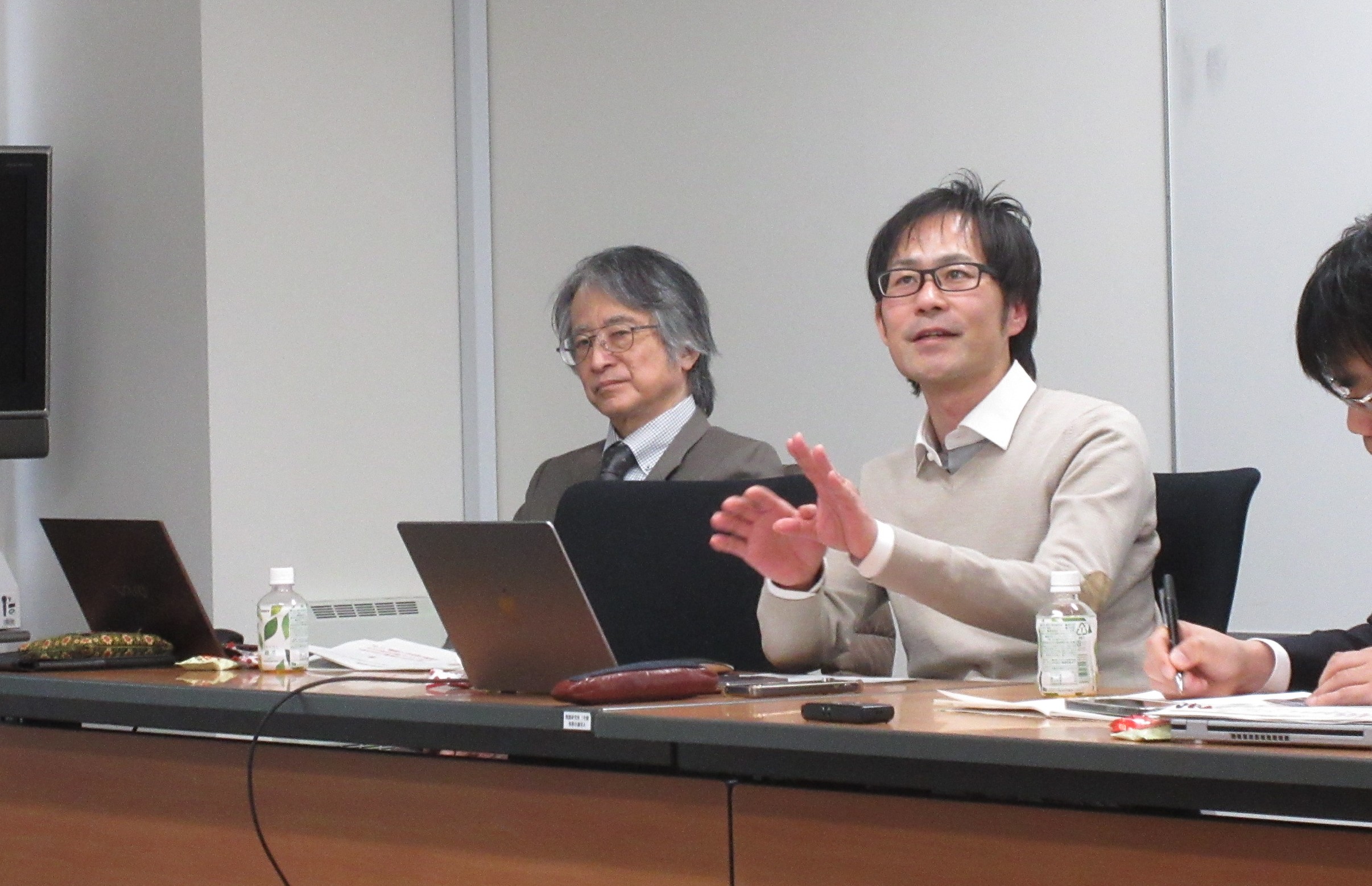
サイエンスカフェを地震火山観測研究推進協議会と広報アウトリーチ室の共同で、2026年3月13日にハイブリッドで開催いたしました。
33回目となる今回は、「2016年熊本地震」というテーマで開催し、松本聡 教授(九州大学)と大友章司 准教授(関東学院大学)を迎え、加藤尚之教授の司会のもと、発生からまもなく10年になる2016年熊本地震を振り返りました。
<地震・火山噴火予測研究のサイエンスカフェ >
地震や火山噴火に関する研究の成果は、予測の基礎となることが期待されています。これまでの研究から、地震や火山噴火のメカニズムへの理解は深まってきました。また、今後発生する可能性のある地震や火山噴火を指摘することもある程度はできます。しかし、規模や発生時期についての精度の高い予測はまだ研究の途上です。このサイエンスカフェでは、地震・火山噴火の予測研究の現状について研究者と意見交換を行い、研究者・参加者双方の理解を深めることを目的とします。
鈴木 秀市 技術専門職員(東北大学)および芹澤 正人 技術専門職員 令和7年度 地震火山災害予防賞受賞

令和7年度 地震火山災害予防賞の授賞式が2026年1月21日に開催されました。
鈴木 秀市(東北大学大学院理学研究科地震・噴火予知研究観測センター 技術専門職員)が、海域における地震・地殻変動観測の高度化に対する功績について。
芹澤 正人(東京大学地震研究所技術部総合観測室 技術専門職員)が、東京大学地震研究所における観測壕を用いた地殻変動観測の遂行及び測器開発試験と陸域地震観測への貢献について、受賞しました。
写真提供:研修運営委員会(左から古村所長、芹沢技術専門職員、鈴木技術専門職員、楠副所長)
※地震研究所では、地震・火山の観測または研究およびその災害の予防軽減において、技術的側面で顕著な功績のあった方を、地震火山災害予防賞として表彰することとしております。これは財団法人震災予防協会の解散にあたって、同協会が行ってきた表彰を引き継ぐものとして平成22年度より始めたものです。
第32回サイエンスカフェ(ハイブリッド)開催報告
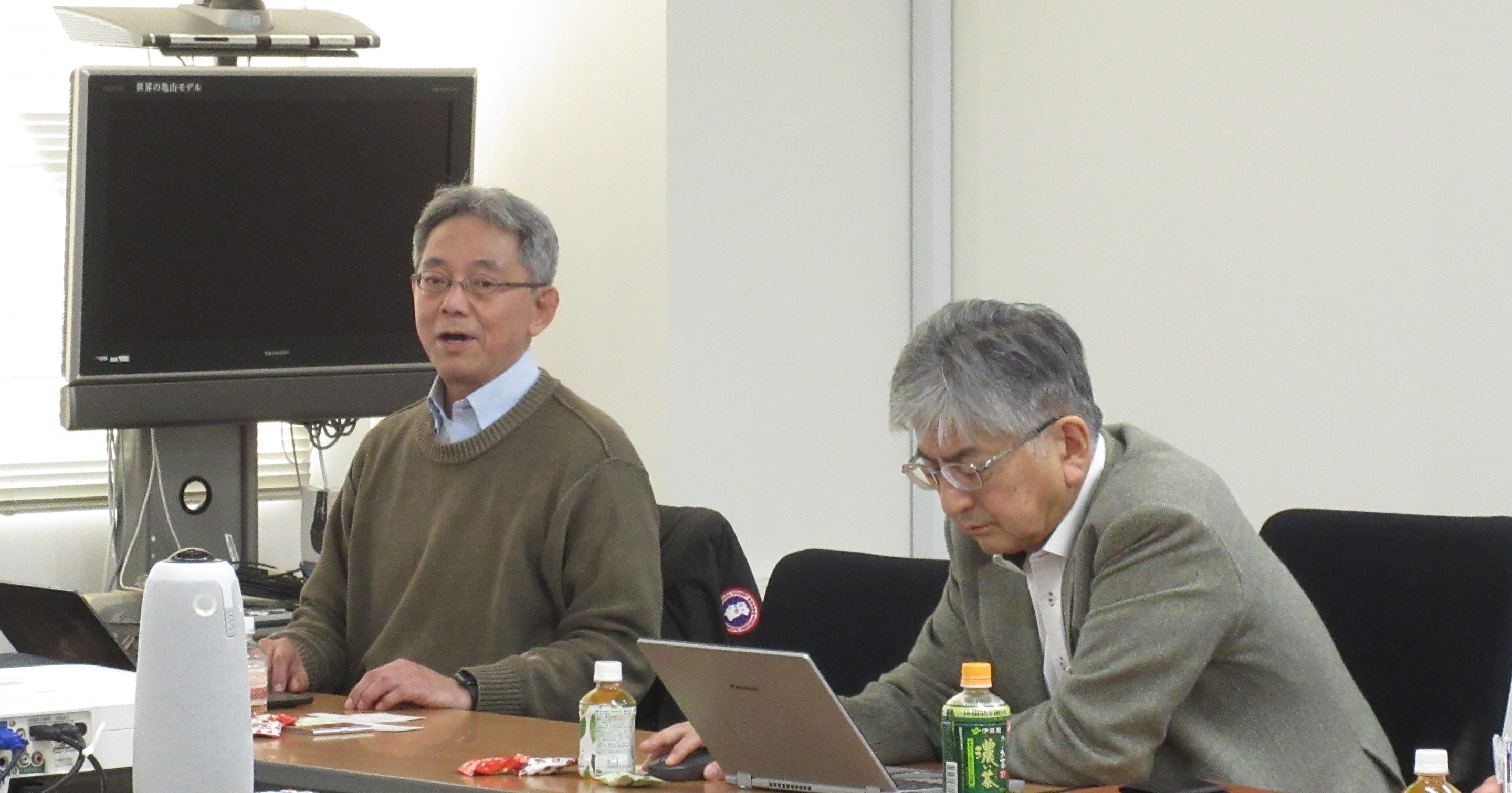
サイエンスカフェを地震火山観測研究推進協議会と広報アウトリーチ室の共同で、2026年2月18日にハイブリッドで開催いたしました。
32回目となる今回は、「三陸沖の地震活動と津波地震」というテーマで開催し、日野亮太 教授(東北大学)および佐竹健治名誉教授(現所属:台湾國立中央大学)を迎え、加藤尚之教授の司会のもと、三陸沖の特徴的な地震活動・テクトニクスについてや、津波について紹介がされました。
<地震・火山噴火予測研究のサイエンスカフェ >
地震や火山噴火に関する研究の成果は、予測の基礎となることが期待されています。これまでの研究から、地震や火山噴火のメカニズムへの理解は深まってきました。また、今後発生する可能性のある地震や火山噴火を指摘することもある程度はできます。しかし、規模や発生時期についての精度の高い予測はまだ研究の途上です。このサイエンスカフェでは、地震・火山噴火の予測研究の現状について研究者と意見交換を行い、研究者・参加者双方の理解を深めることを目的とします。
第1055回地震研究所談話会開催のお知らせ
記のとおり地震研究所談話会を開催いたします。
対面での開催を再開しておりますので、地震研究所へお越しいただければ幸いです。
なお、お知らせするZoom URLの二次配布はご遠慮ください。また、著作権の問題が
ありますので、配信される映像・音声の録画、録音を固く禁じます。
記
日 時: 令和8年2月20日(金) 午後1時30分~
場 所: 地震研究所1号館2階 セミナー室
Zoom Webinarにて同時配信
1. 13:30-13:45
演題:三浦半島断層群・相模トラフ調査観測プロジェクト部【所長裁量経費報告】
著者:○石山達也・三宅弘恵・蔵下英司・古村孝志・酒井慎一、宍倉正展(産業技術総合研究所)
要旨:三浦半島断層群・相模トラフ調査観測プロジェクト部の研究成果について、「三浦半島断層帯(主部/武山断層帯)における重点的な調査観測」の成果概要とともに報告する。
2. 13:45-14:00
演題:Seismic Source Characterization in the Marmara Sea Using Distributed Acoustic Sensing
著者:○Ji ZHANG・Aitaro KATO、 Ahmet Anil DINDAR(MARTEST Research and Training Center, Gebze Technical University) and Wei WANG(Key Laboratory of Earth and Planetary Physics, Institute of Geology, Geophysics, Chinese Academy of Sciences/College of Earth and Planetary Sciences, University of Chinese Academy of Sciences)
3. 14:00-14:15
演題:Revealing Widespread Non-Double-Couple Earthquakes in Tottori, Japan
著者:○Ji ZHANG・Aitaro KATO、Wei WANG(Key Laboratory of Earth and Planetary Physics, Institute of Geology and Geophysics, Chinese Academy of Sciences/College of Earth and Planetary Sciences, University of Chinese Academy of Sciences)、 Shin’ichi SAKAI、 Satoshi MATSUMOTO(Institute of Seismology and Volcanology, Faculty of Sciences, Kyushu University)、Yoshihiro ITO(Disaster Prevention Research Institute, Kyoto University)
4. 14:15-14:30
演題:スロー地震の断層滑りの広がりを規定する地下構造【成果発表補助 成果報告】
著者:○悪原 岳、白石和也(JAMSTEC)、辻 建(東大工)、山下裕亮(宮崎公立大)、杉岡裕子(神戸大)、Atikul Haque FARAZI(バリシャル大)、大柳修慧・伊藤喜宏(京都大)、新井隆太・荒木英一郎・藤江 剛・中村恭之・利根川貴志(JAMSTEC)、東 龍介・日野亮太(東北大)、望月公廣・武村俊介・山田知朗・篠原雅尚
5. 14:30-14:45
演題:新燃岳2008年噴火の以前、噴火直前及び以後に発生した火山性地震の深度分布とb値の特徴
著者:○及川 純、田島靖久(日本工営(株)中央研究所)
○発表者
※時間は質問時間を含みます。
※既に継続参加をお申し出いただいている方は、当日Zoom URLを自動送信いたします。
※談話会のお知らせが不要な方は下記までご連絡ください。
〒113-0032 東京都文京区弥生1-1-1
東京大学地震研究所 共同利用担当
E-mail:k-kyodoriyo(at)eri.u-tokyo.ac.jp
※次回の談話会は令和8年3月23日(月) 午後1時30分~です。
東京大学工学系研究科社会基盤学専攻2027年度大学院進学希望者向け説明会・研究室紹介について
東京大学工学系研究科社会基盤学専攻では、2027年度大学院入試(2026年夏実施)の受験を検討されている方を念頭に説明会・研究室紹介を2026年3月15日にオンラインで実施いたします。
詳細については、社会基盤学専攻HP(https://www.civil.t.u-tokyo.ac.jp/graduate_school/)をご覧ください。皆様のご参加をお待ちしております。
※地震研究所は、「理学系研究科(地球惑星科学専攻)をはじめとし、工学系研究科(社会基盤学専攻、建築学専攻)、大学院情報学環・学際情報学府(学際情報学専攻総合分析コース・先端表現情報学コース)、情報理工学系研究科(数理情報学専攻)などと協力しつつ、世界的にも指導的役割を果たしうる研究者を育成する」ことを目指しており、上記の部局の学生を受け入れています。地震研究所の研究室に所属希望の学生の方はこれらの専攻大学院試験受験をご検討ください。
【共同プレスリリース】琉球沈み込み帯における地震スーパーサイクルを解明
地震研究所・琉球大学がIPGP(Institut de Physique du Globe de Paris)と共同で行った研究が、琉球大学よりプレスリリースされました。
琉球沈み込み帯における地震スーパーサイクルを解明 ~数千年周期で繰り返す巨大地震の仕組みに迫る~
<発表のポイント>
◆ どのような成果を出したのか
石垣島に分布する化石サンゴの地質記録を解析し、南部琉球海溝では巨大地震が数
千年規模の「スーパーサイクル」として繰り返し発生してきた可能性が高いことを明らかにしました。
◆ 新規性(何が新しいのか)
過去約5000年間の相対的海面変動と地殻隆起の履歴を復元し、地震断層モデルと組み合わせることで、巨大な沈み込み地震による急激な隆起が周期的に起きていたことを示しました。
◆ 社会的意義/将来の展望
本研究は、琉球諸島における地震・津波発生の長期的特性を明らかにし、将来の地震・津波リスク評価において、数千年スケールの履歴を考慮する重要性を示すものです。
詳細:https://www.u-ryukyu.ac.jp/news/75566(琉球大学HP)
金曜日セミナー(2026年2月27日)Erika Moreno(日本列島モニタリング研究センター)
Title:
Rheological modeling to assess the effects of seamount subduction
Abstract:
The Kyushu–Palau Ridge (KPR) acts as a structural boundary, separating two distinct subduction zones: the Ryukyu Trench, where the old West Philippine Basin (WPB) is subducting, from the Nankai Trough, where the younger Shikoku Basin of the Philippine Sea Plate descends. This contrast is reflected in a sharp thermal gradient, with high heat flow toward the Shikoku Basin and markedly lower values toward the WPB. Notably, the lowest heat flow occurs seaward of the subducting KPR, a region that also exhibits tectonic tremors and low-frequency earthquakes. It has been hypothesized that these correlated features result from stress and strain modulation caused by seamount subduction. To test this hypothesis, we conducted two-dimensional numerical simulations with realistic rheology for the Hyuga-Nada region. Our aim was to evaluate how seamount subduction affects the overlying plate and its potential links to both slow earthquake conditions and the observed heat-flow anomalies. We developed four numerical models to analyze the sensitivity of the system to seamount subduction as a function of the incoming plate’s age: an old plate (47 Myr) without (Model 1) and with (Model 2) a seamount, and a young plate (25 Myr) without (Model 3) and with (Model 4) a seamount. Forearc sediments were assigned a depth-dependent density, ranging from approximately 1600 kg/m³ to 2600 kg/m³ based on data from a nearby IODP site, assuming an exponential increase with depth. These sediments exhibit strain-weakening behavior, with an initial internal friction angle of 10° and cohesion of 1 × 10⁶ Pa, decreasing to 5° and 1 × 10⁵ Pa after deformation. In contrast, the oceanic and continental crust maintain constant values (30° and 1 × 10⁶ Pa, respectively). The modeling results indicate that seamount subduction enhances forearc deformation for both old and young plates, manifested as shear bands in the upper crust. The spatial distribution and intensity of these shear bands reflect the combined influence of plate age and the presence of a seamount. Models without a seamount (1 and 3) display nearly constant deviatoric horizontal stress and systematic shear-band development, indicative of strong interplate mechanical coupling. Conversely, models that include a seamount (2 and 4) show significant stress variations controlled by the seamount’s position, which locally suppress forearc fracturing within a specific depth interval. This suppression coincides with the seamount entering high-density sediments. Prior to this stage, interaction with low-density sediments generates permanent deformation at relatively low stress. After the seamount passage weakens the sediments, shear-band development resumes and subduction dynamics regain dominance. Plate age further modulates this response: Model 2 (old plate) produces greater forearc deformation and higher strain rates than Model 4 (young plate).
金曜日セミナー(2026年2月6日【15時~】)Anatoli Fedynitch(Institute of Physics, Academia Sinica)
1. Title: Exploring the Universe with Neutrinos: From IceCube to IceCube-gen2
Abstract:
Neutrinos offer a unique window into some of the most energetic and distant phenomena in the universe. The IceCube Neutrino Observatory at the South Pole is currently the world’s largest neutrino detector, utilizing a cubic kilometer of Antarctic ice instrumented with thousands of optical sensors to detect Cherenkov radiation from neutrino interactions. In this colloquium, I will introduce the science behind IceCube, explain how neutrino detection and reconstruction work in ice, and highlight key discoveries — including the identification of astrophysical neutrino sources and constraints on fundamental particle physics. I will also share insights and experiences from my recent expedition to the South Pole, contributing to the IceCube Upgrade project to enhance the observatory’s low-energy sensitivity and calibration capabilities. Finally, I will present an outlook on IceCube-Gen2, the next-generation neutrino observatory, aiming to significantly expand IceCube’s scientific reach and open new frontiers in astroparticle physics.
2. Title: Recent advances in data-driven modeling of cosmic ray and atmospheric lepton fluxes
Abstract:
Accurate models of the cosmic ray spectrum and the fluxes of atmospheric muons and neutrinos provide essential inputs for interpreting astrophysical neutrino observations, neutrino oscillation studies, and investigating hadronic interaction models, as well as a wide range of applied fields, including muon tomography. In this talk, I will present our recent progress toward a fully data-driven and muon-calibrated description of atmospheric lepton fluxes. The daemonflux framework combines “foundation models” of the cosmic ray spectrum, numerical cascade calculations (MCEq), and hadronic interaction models with a global calibration procedure using muon flux and charge ratio measurements. I will highlight the latest update of the Global Spline Fit (GSF2025), a flexible cosmic ray flux parameterization covering energies from the GeV scale up to 100 EeV, and discuss how daemonflux predictions compare with underground muon measurements using the MUTE framework and demonstrate how these results enhance the description of recent KM3NeT muon data, achieving excellent agreement with observations and paving the way for precision atmospheric flux predictions.