László Oláh, Hiroyuki K. M. Tanaka Toward joint muography and ground deformation monitoring for volcanic unrest assessment J. Appl. Phys. 138, 060701 (2025) https://doi.org/10.1063/5.0275038
加藤慎也, 飯尾能久, 長尾大道, 片尾浩, 澤田麻沙代, 冨阪和秀 SegPhase: development of arrival time picking models for Japan’s seismic network using the hierarchical vision transformer Earth Planets Space77, 118, doi: 10.1186/s40623-025-02249-y, 2025
Okada, Y. (1985). Surface deformation due to shear and tensile faults in a half-space, Bull. Seism. Soc. Am., 75, 1435-1154. doi:10.1785/BSSA0750041135
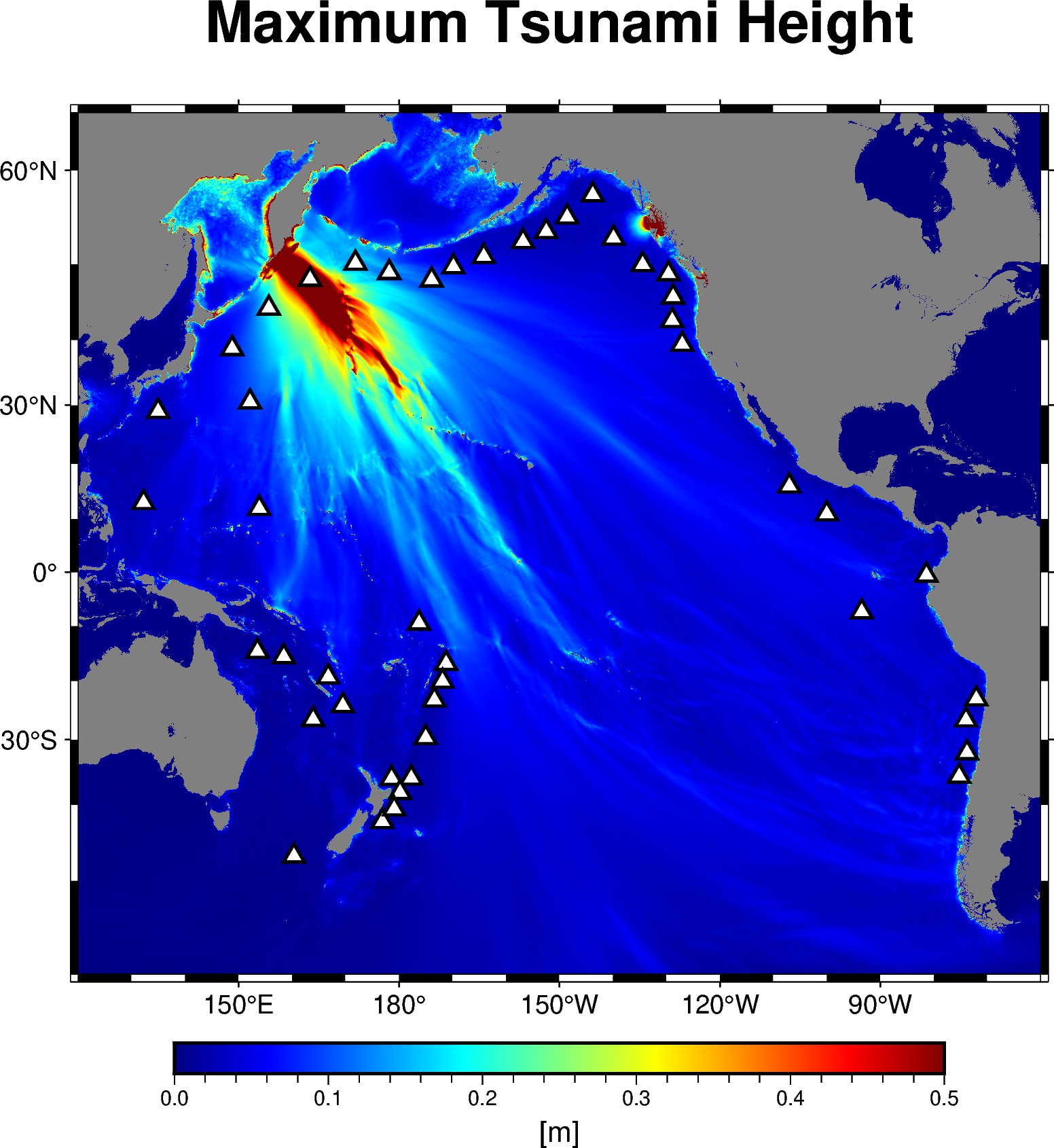
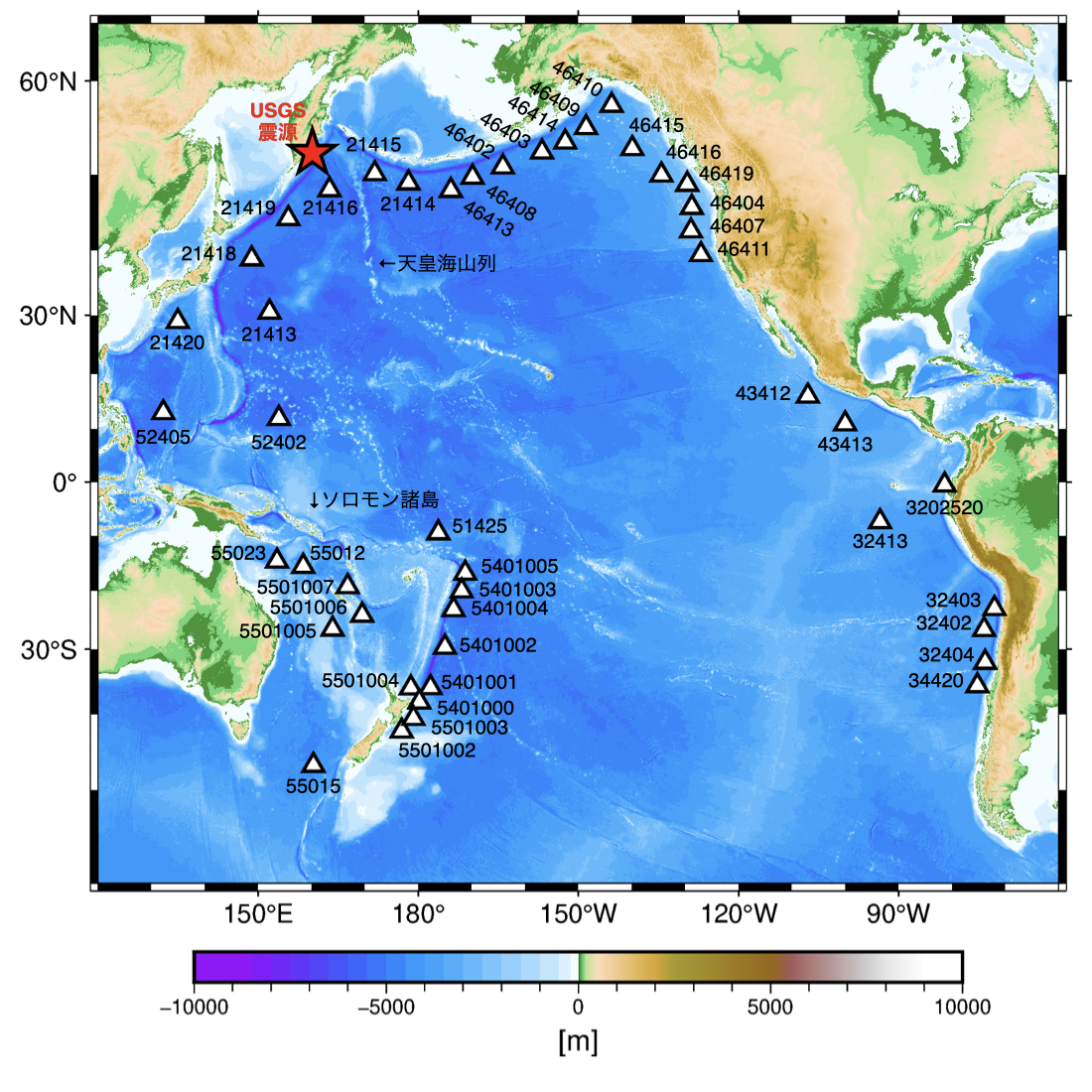
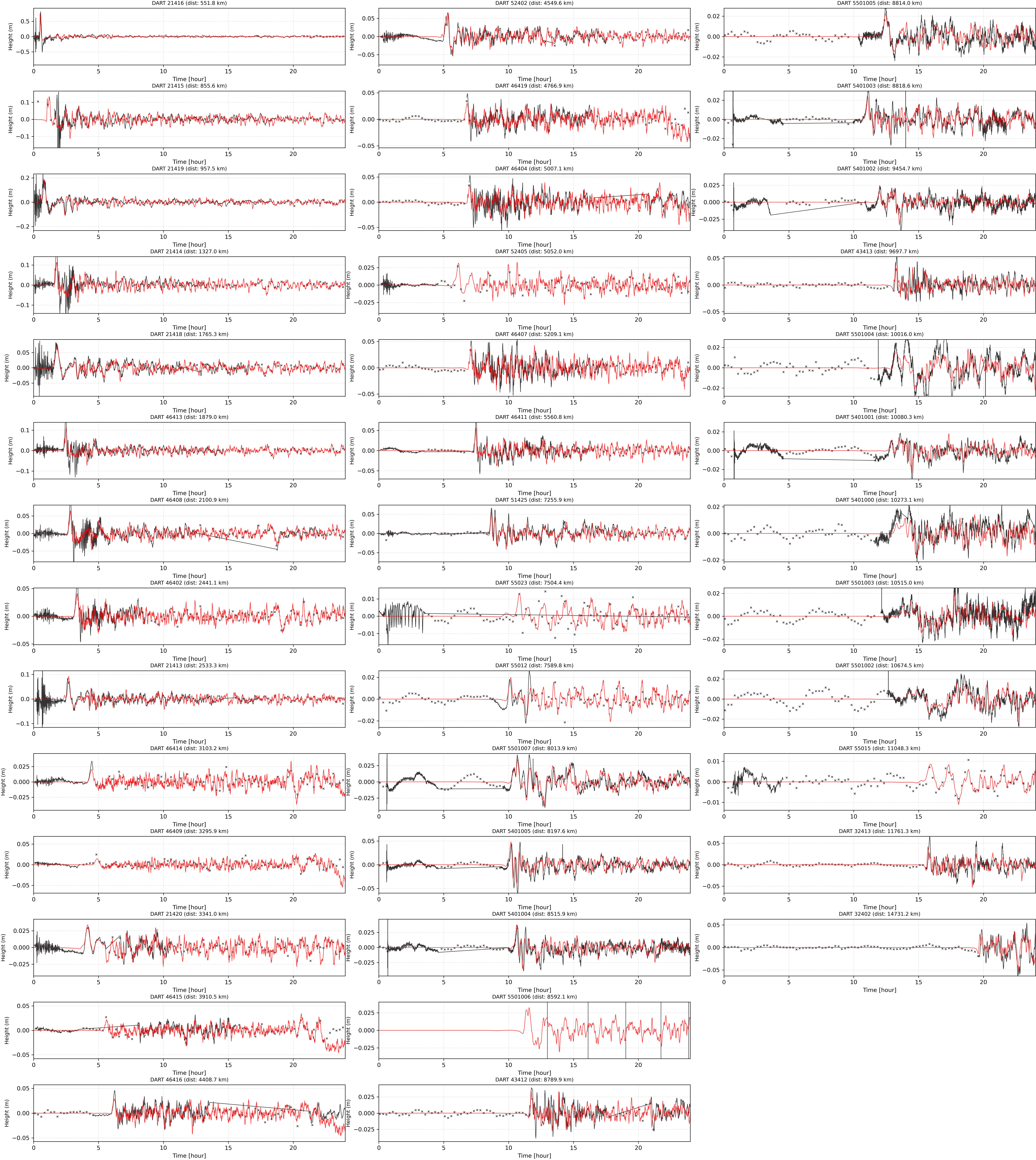
Baba, T., Takahashi, N., Kaneda, Y., Ando, K., Matsuoka, D., & Kato, T. (2015). Parallel implementation of dispersive tsunami wave modeling with a nesting algorithm for the 2011 Tohoku tsunami. Pure and Applied Geophysics, 172(12), 3455-3472. doi:10.1007/s00024-015-1049-2
Watada, S., Kusumoto, S., & Satake, K. (2014). Traveltime delay and initial phase reversal of distant tsunamis coupled with the self‐gravitating elastic Earth. Journal of Geophysical Research: Solid Earth, 119(5), 4287-4310. doi:10.1002/2013JB010841
Allgeyer, S., & Cummins, P. (2014). Numerical tsunami simulation including elastic loading and seawater density stratification. Geophysical Research Letters, 41(7), 2368-2375. doi:10.1002/2014GL059348
掲載日:2025/07/30
W-phase解析結果 (モーメントテンソル解)
世界中で観測された,この地震による地震波の記録からW-phase(P波とS波との間にある,超長周期の実体波)を取り出し,Kanamori and Rivera (2008)の方法で解析した モーメントテンソルインバージョンによるメカニズム解になります.モーメントマグニチュードは,8.86と求まっています.
(日本列島モニタリング研究センター:鶴岡 弘 准教授)
Screenshot
参考文献: Kanamori, H. and L. Rivera (2008): Source Inversion of W phases: speeding up seismic tsunami warning, Geophys. J. Int., 175, 222-238.
Title: Advancing centroid moment tensor analysis for offshore earthquakes: progress and future perspectives
Abstract:
Focal mechanisms of earthquakes are essential for understanding seismic processes and the stress field. In previous studies, centroid moment tensor (CMT) analysis of offshore earthquakes has primarily relied on onshore seismic networks located far from the earthquake source region. With the deployment of offshore seismic networks, azimuthal station coverage has significantly improved, offering the potential to improve the stability of CMT solutions. However, seismograms obtained by offshore stations are complex due to strong heterogeneity in subsurface structures and the effects of seawater. Therefore, incorporating three-dimensional (3-D) structural heterogeneity into the CMT analysis is important. This presentation introduces CMT analyses using the S-net offshore stations. The results include thrust events consistent with subduction processes, as well as outer-rise earthquakes concentrated at depths around 20 km. These findings suggest that improved azimuthal station coverage and the use of 3-D seismic velocity structure models contribute to stable CMT solutions. Moreover, we demonstrate that incorporating Rayleigh waves converted from Scholte waves improves constraints on shallow offshore earthquakes occurring in regions with thick seawater layers, such as outer-rise events. This approach notably enhances the accuracy of depth estimates, deepening our understanding of the mechanisms of outer-rise earthquakes. The presentation will conclude with a discussion on future directions.